Wine Rooms & Wine Walls in Fresno
Climate-controlled wine rooms, glass-fronted wine walls and under-stair cellars — built as cabinetry rather than bought as a kit, and designed around the bottles you actually own.
The space is already in your house.
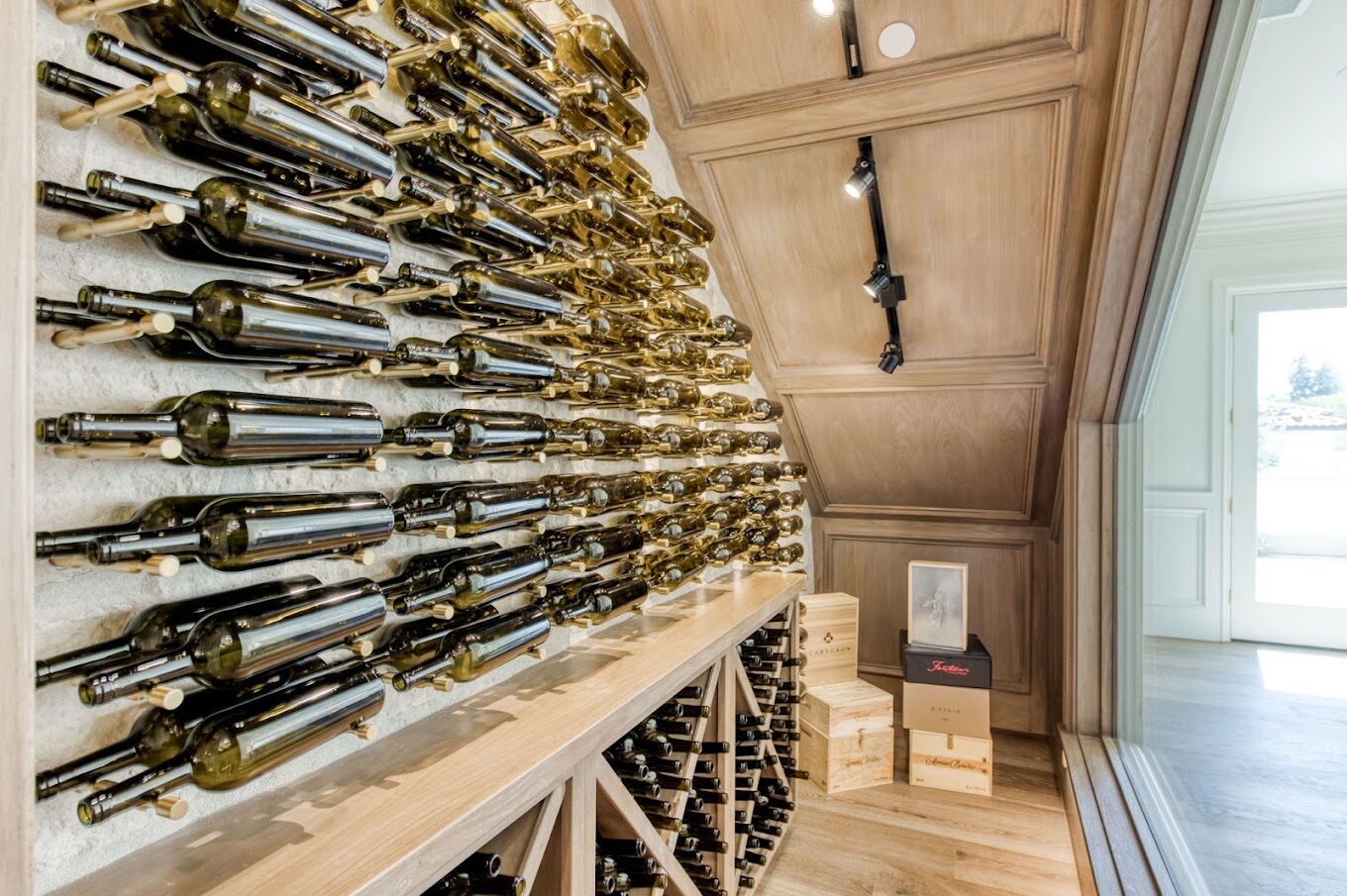
Most of the Fresno wine rooms we build are not additions. They are an under-stair void, the end of a dining room, a disused closet off the kitchen, or the dead wall in a great room that never knew what it was for.
The constraint is almost never floor area — it is getting the temperature stable and keeping light off the bottles. Once those two are solved the rest is cabinetry, and cabinetry is what we do.
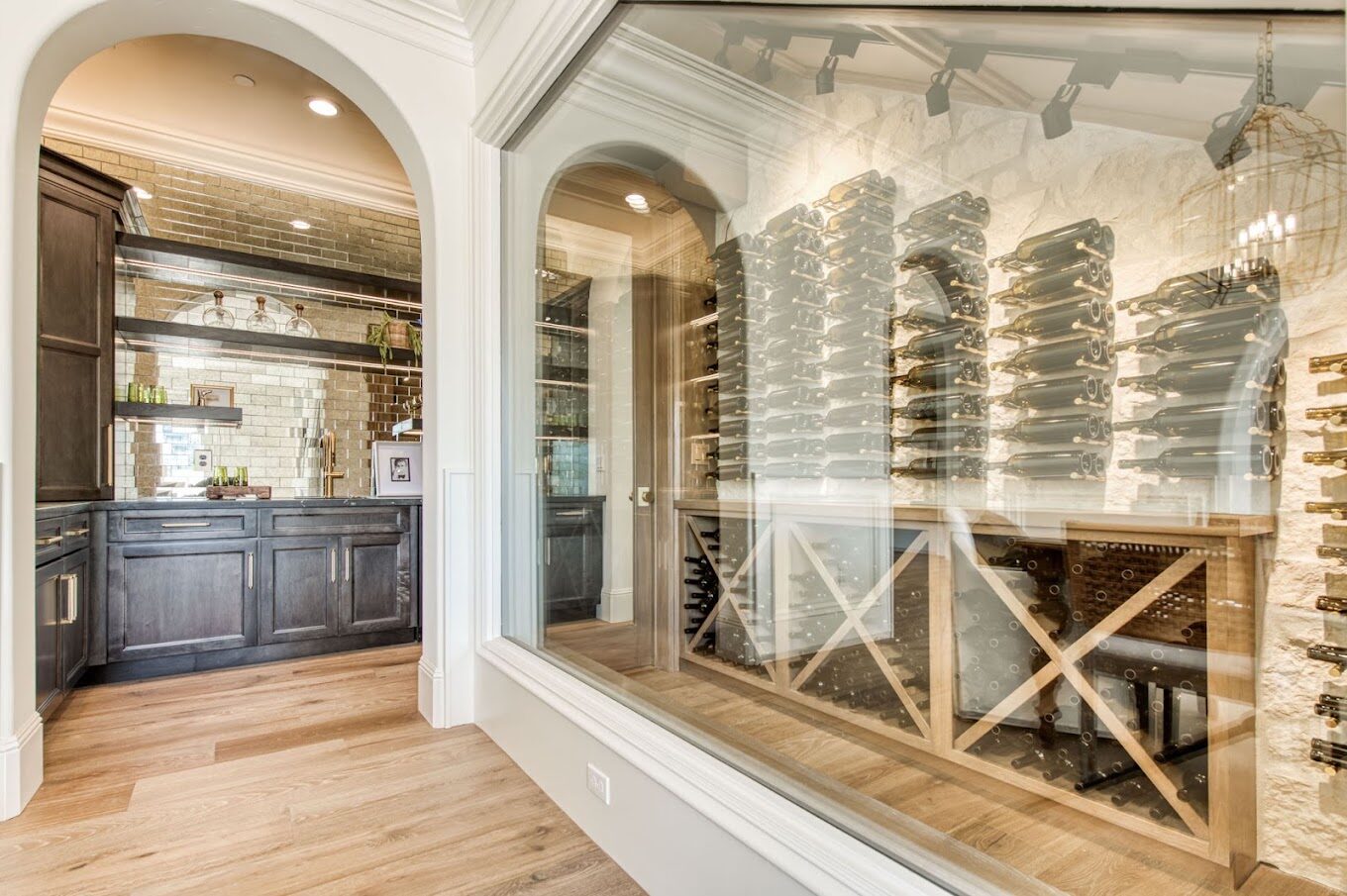
Glass-fronted wine walls have become the common request because they turn storage into the feature of the room. They also need the most thought, because glass and temperature stability pull in opposite directions.
What goes into a Fresno wine room
Racking and bottle layout
Individual bottle, diamond bin, case storage and display rows, sized to the bottles you own rather than a catalogue standard. Magnums and oddly shaped bottles are what stock racking fails on first.
Climate control
A cooling unit sized to the sealed volume of the room. This is what separates a wine room from a cupboard with racks in it, and it has to be specified before the cabinetry is drawn, not after.
Insulation and vapour barrier
A cooled room inside a Fresno house needs a proper envelope or you are paying to chill the rest of the building. Done badly it also produces condensation inside the wall, which you discover much later.
Glass and doors
Insulated glazing and a sealed door, because a standard interior door will not hold temperature. Frameless glass looks best and demands the most careful detailing.
Lighting
Low-heat LED positioned to light labels rather than bake them. Heat and UV are what damage wine on display, and most off-the-shelf display lighting produces too much of both.
Finish and hardware
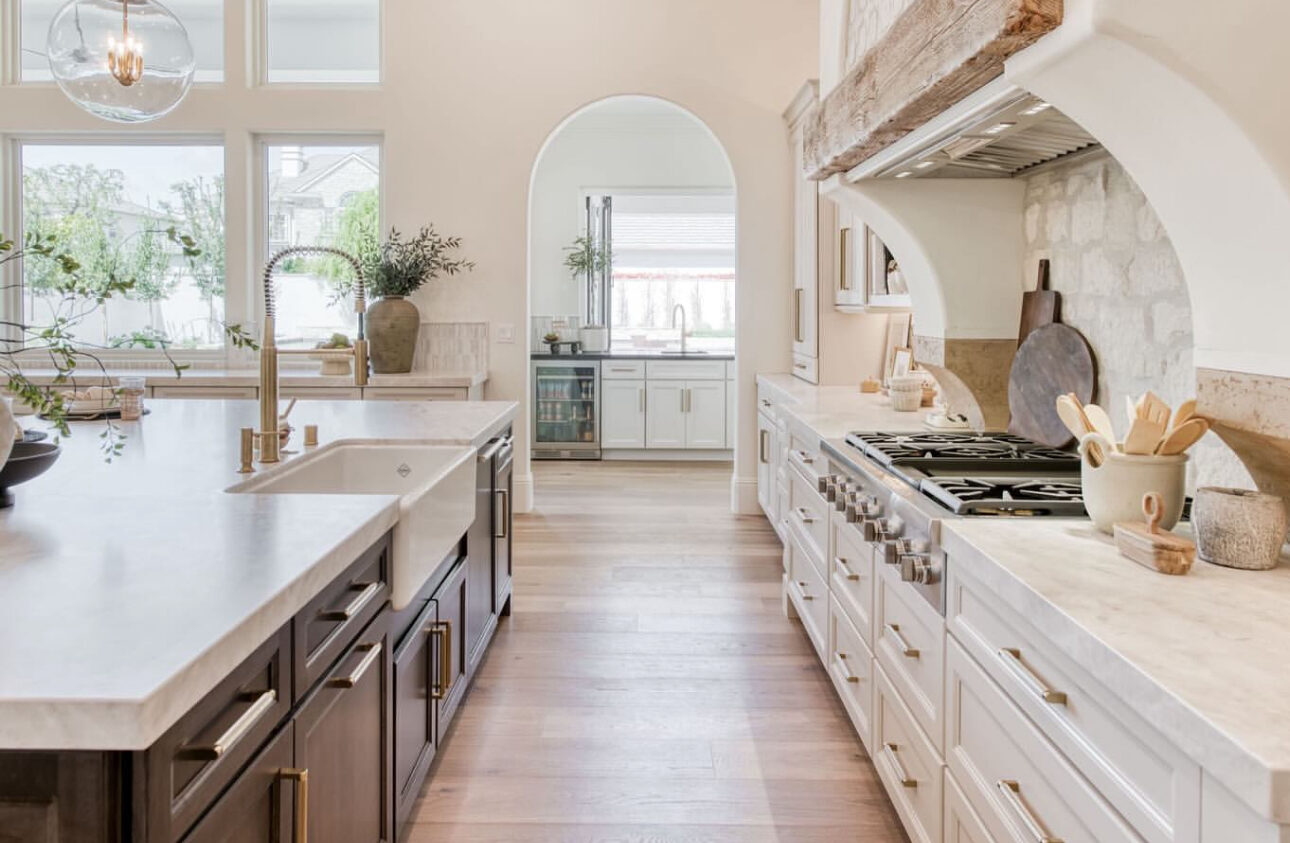
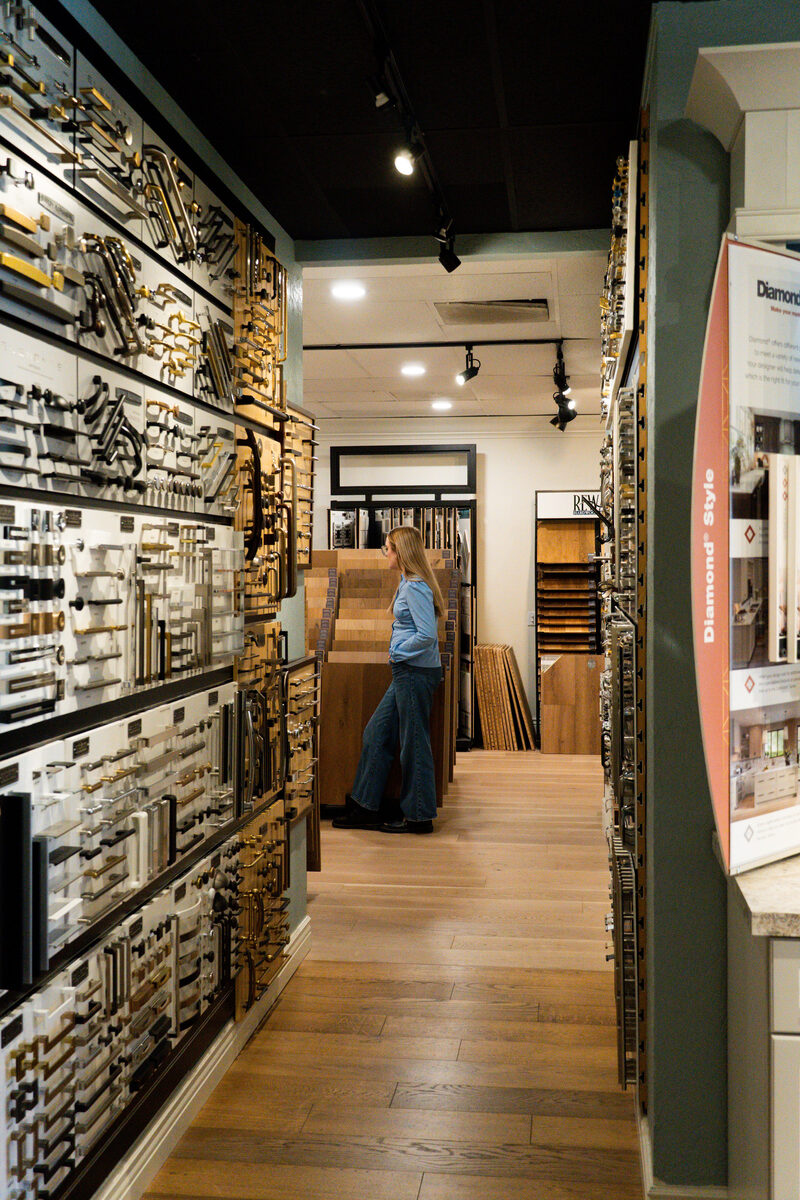
Wood species, stain and hardware chosen against the room it opens onto, so the wine wall reads as part of the house rather than an appliance bolted to it.
Cooling first, cabinetry second.
We start with the sealed volume and the cooling load, because that decides what the room can be. Everything else — rack layout, glass, finish — follows from a number that has to be right first.
Then it is cabinetry. Racking gets built the way we build cabinets, which is why it holds a line and why unusual bottle sizes can be designed for rather than worked around.
If you want a wine wall for display more than long-term cellaring, say so early. That is a genuinely different brief with different glass, different lighting and a different budget — and a perfectly good thing to want.
See completed wine roomsWine rooms in Fresno — common questions
It is driven by size, whether it is actively cooled, and how much glass is involved. A glass-fronted cooled wine wall sits well above a simple racked closet. We scope it against your space and bottle count before quoting.
For display and short-term storage, often not. For anything you intend to age in a Fresno house, yes — our summers are exactly the condition that ruins wine. We will tell you honestly which brief you actually have.
That is one of the most common places we put them. Under-stair voids suit wine storage because they are small, interior and already dark. The awkward geometry is a cabinetry problem, which is the kind we are set up to solve.
It depends entirely on the space and the mix of bottle sizes. We lay racking out to a real bottle count you give us, including the magnums, rather than quoting a headline number you cannot achieve in practice.
Yes, and usually we should. Same door profile, same stain, same hardware, so the wine wall reads as part of the house. That is far easier when both come from the same shop.
Related work
Tell us how many bottles and where the space is.
Bring rough dimensions and a realistic bottle count. Ken will tell you what that space can hold and whether it needs cooling before anyone talks about price.