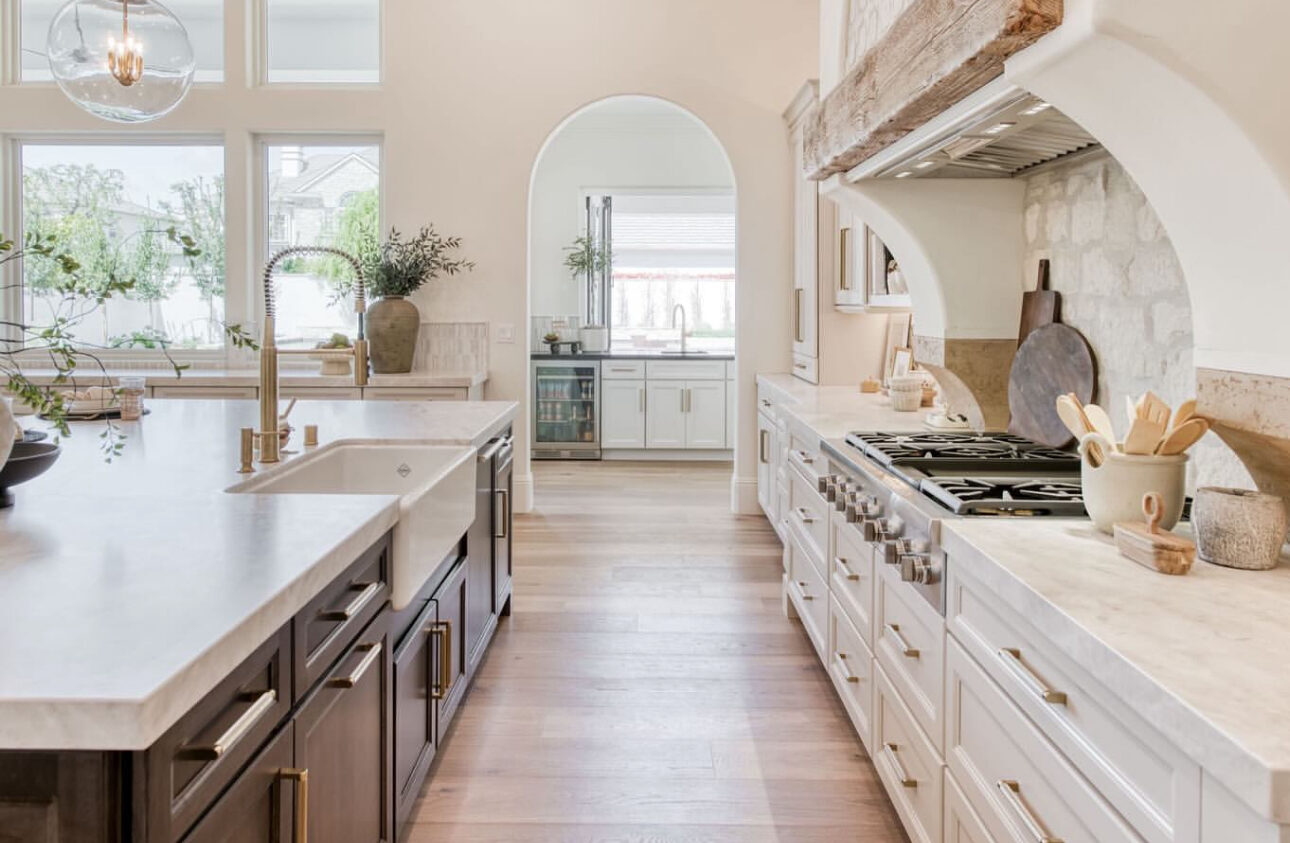
Quartz vs Granite in a Fresno Kitchen
We install both and make nothing extra on either, so here is the comparison without a thumb on the scale — including the one situation where the usual answer reverses completely.
This is the most common material question we get, and most of the advice online is written by someone who sells only one of the two. We sell both, so the honest answer is that it depends on two things: how much maintenance you are willing to think about, and whether the counter is going outside.
Quartz
Engineered stone — crushed quartz bound in resin. Non-porous, so it does not need sealing, and the pattern is consistent from slab to slab, which makes it predictable to specify.
- No sealing, ever. This is the main practical advantage and it matters more than people expect over twenty years.
- Highly stain resistant. Wine, oil and citrus are non-events.
- Consistent appearance, so what you see on the sample is what arrives.
- Less heat tolerant than granite. The resin can scorch — use a trivet, which you should anyway.
- Not UV stable in most formulations. This is the critical one for outdoor use in Fresno.
Granite
Natural stone, cut from a quarry. Every slab is genuinely different, which is why you choose the actual slab rather than a chip.
- Movement and depth no engineered surface reproduces. If you want the counter to be the feature, this is usually how you get there.
- Excellent heat tolerance.
- Handles direct sun, so it works outdoors where quartz does not.
- Needs sealing periodically. How often depends on the specific stone, and we tell you which yours is.
- Variable — the slab you approve is the slab you get, which is a feature if you go and look at it and a risk if you do not.
The Fresno-specific part
Indoors, quartz is the answer for most working family kitchens, and it is what we install most often. Outdoors, that reverses entirely.
Most engineered quartz is not UV stable. In a Central Valley summer it will discolour, and no amount of sealing or care prevents it.
For outdoor kitchens we specify granite or quartzite, every time. This surprises people who have just been told quartz is the best choice for their indoor kitchen — both pieces of advice are correct, they just apply to different rooms.
What about quartzite?
Worth knowing about. Natural stone that reads like marble but is considerably harder, and it handles outdoor conditions. It is the answer for clients who want marble in a kitchen that would destroy actual marble. It prices above granite.
How to actually decide
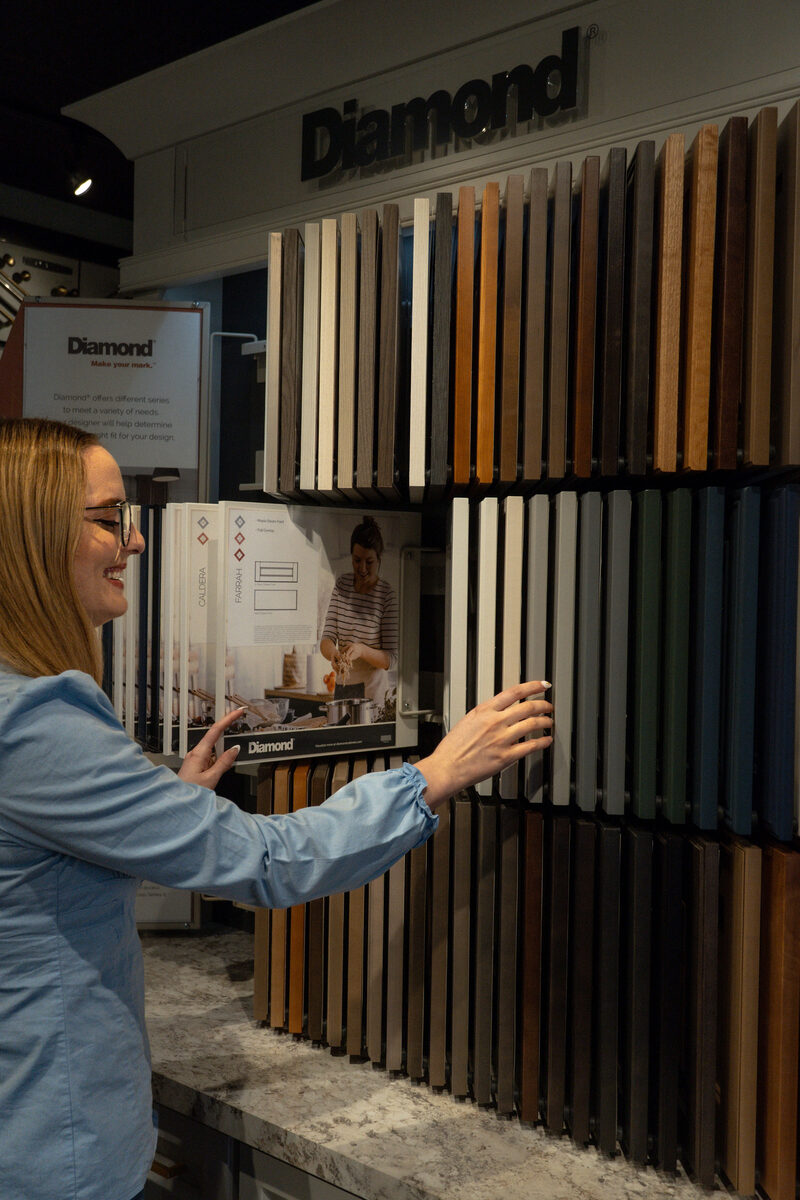
Come and look at slabs next to your cabinet door, under the same light. Sample chips mislead on both materials — granite because the chip cannot show you the movement, quartz because the chip cannot show you the scale of the pattern.
Quartz and granite questions
Both outlast most kitchens if installed properly. The difference is maintenance rather than lifespan: granite asks for periodic sealing, quartz asks for nothing.
On granite, generally yes. On quartz, no — the resin can scorch and the damage is permanent. Use a trivet on either and the question goes away.
They overlap heavily. Both have wide ranges and the specific slab matters more than the category. Fabrication complexity often moves the total more than the material choice does.
Granite or quartzite, without hesitation. Most engineered quartz is not UV stable and will discolour in direct Central Valley sun.
For granite, yes — strongly. For quartz it matters less because the pattern is consistent, though seeing the scale of the pattern at full size is still worth the trip.
Put slabs next to your cabinet door.
Bring the door style you are considering. Fifteen minutes in the showroom with real slabs settles a question that weeks of browsing will not.